

A massive artificial intelligence data centre proposed by celebrity investor Kevin O'Leary near Utah's Great Salt Lake won county approval before any environmental impact study could be commissioned, let alone completed.
The approval May 4 came despite hundreds of protesters opposing the project at a special public meeting of the Box Elder County Commission. A three-person panel of commissioners was forced to abandon the stage and retreat to another location, from where they livestreamed their vote, reported KUER News.
Their approval transferred jurisdiction over the data centre to another government entity, Utah's Military Installation Development Authority (MIDA).
"Our vote today is not a vote for or against the data centre," said commissioner Lee Perry. "Our vote is about personal property rights and whether we can put any guardrails on this issue," they added, referring to the ranchers who required their sign-off before the land could be sold to O'Leary.
MIDA's board is appointed by the governor and federally elected officials, effectively functioning as a local government for the projects it takes under its wing, according to the Salt Lake Tribune, which calls it "a mysterious Utah agency." It must include at least some military land or property, and generate tax revenue, but it also has the power to hand out a variety of tax breaks or financing deals to support developers. MIDA is excluded from open access laws when it comes to public-private partnerships like O'Leary's Stratos project.
Stratos, which could either be named after a fictional city on the planet Ardana from the Star Trek television series or an ancient Greek settlement on a river of strategic military importance, is sited on a section of a U.S. Department of Defense military testing and training area.
The hyperscale data campus will take up over 160 square kilometres and require as much electricity as two states the size of Utah. The plan is to power it behind-the-meter with gas from the Ruby pipeline that traverses Box Elder County, eventually tying into the grid later to contribute any excess power it generates.
The Canada Pension Plan Investment Board (CPPIB) has invested $1.2 billion in Tallgrass Energy, the company that owns and operates the Ruby Pipeline, giving it an estimated 24.5% stake in the company. Tallgrass operates 16,000 kilometres of oil and gas pipelines and storage terminals across the United States. Alice Yang, managing director of CPPIB's "Sustainable Energies" group, also sits on the Tallgrass board.
It's just one example that shows the fund is "making a big bet on gas to power data centres," Patrick DeRochie, senior manager with Shift Action for Pension Wealth and Planet Health told The Energy Mix.
Stratos will be built in phases over the next decade, ABC4 reports, noting that the Utah Department of Environmental Quality and Department of Natural Resources will need to grant approvals before construction begins. There have been suggestions of some renewable energy, but no concrete commitments have been made, the Tribune reports.
Generative AI data centres are increasingly turning to fossil fuels like coal and gas, putting the global energy transition at risk, finds a report by the Green Web Foundation.
"There's a good reason petrotech projects like this are so unpopular," said Chris Adams, the foundation's director of policy and technology. "The internet should serve everyone: openly, fairly, and without wrecking the planet in the process, and this project is the opposite of that."
From the get-go, the Utah project is "shifting costs to communities, and will saddle them with all the environmental harms that come with the enormous amounts of fossil gas infrastructure."
Originally dubbing it "Wonder Valley," and pairing it with another AI data centre of similar scope that O'Leary announced in 2024 for northern Alberta, O'Leary Digital said in a news release in February that the Utah location "benefits from access to major interstate natural gas infrastructure and proximity to aerospace, defence, and advanced manufacturing ecosystems."
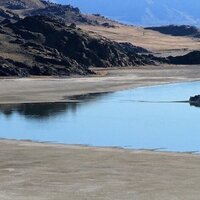
But the ecosystems that many in the community are concerned about are not the same ones O'Leary mentions in his news release. The people who live and work in the area love the Great Salt Lake and Hansel Valley sagebrush steppe ecosystem, spanning 14 states and three Canadian provinces, and home to more than 350 species of conservation concern.
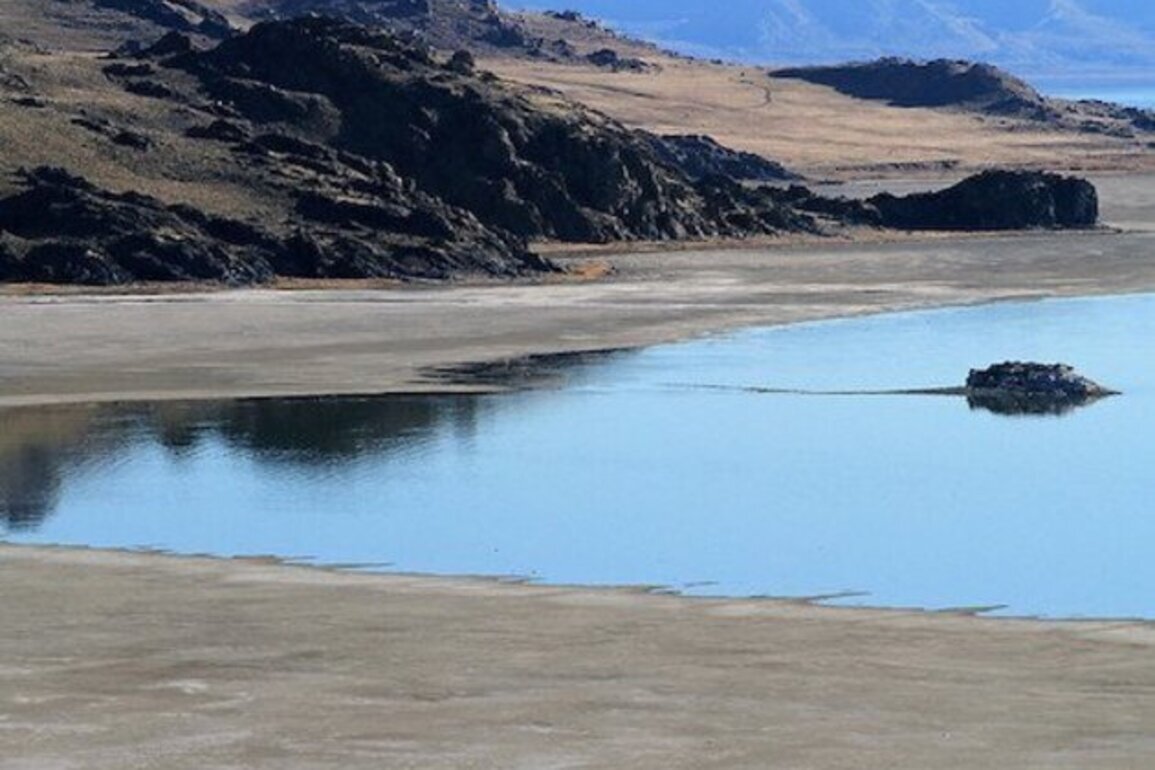
The Great Salt Lake is the largest saltwater lake in the Western Hemisphere, declared by the state as "vital to the environment, ecology and economy, not just in Utah but also the western U.S." Governor Spencer J. Cox pledged in 2025 to protect the lake, which is threatened by "drought, climate change, and continued demand," according to the state.
Yet, Cox, along with local ranchers, Box Elder County commissioners, and MIDA, support the plan for a hyperscale data centre not far from the lake.
"Projects of this magnitude require disciplined execution and close collaboration with state and local leadership, and we are committed to working in partnership as the project advances," O'Leary said in that first news release.
He praised Cox's leadership and thanked Senate President J. Stuart Adams, along with Utah's federal delegation, including Senators Mike Lee (R-UT) and John R. Curtis (R-UT).
Adams is also on the MIDA board, which had been advocating on behalf of O'Leary Digital to share project expenses in the tens of millions of dollars with Box Elder County, the Salt Lake Tribune discovered through an open records request.
Cox told reporters at his monthly news conference that AI development is a new arms race and that "every state has an obligation" to build these data centres.
Meanwhile, O'Leary has launched a media offensive against anyone protesting his Utah data centre. In multiple posts on social media, he claimed "over 90% of the protesters are actually not people that live in Utah or Box Elder County," alleging they were bused in for the public meetings.
"People who live in Utah aren't stupid," O'Leary said. "They see this happening and they realize, why am I letting people who don't even live in my state make decisions for me?"
He took it a step further on Fox News, claiming that the protesters were funded by the Chinese government, naming three local organizers and two well-known online influencers from outside Utah who posted online about the controversy.
He said his team had looked into the IP addresses of some of the people protesting the project and found two "cells inside of Utah" which he identified as the Alliance for a Better Utah and Elevate Strategies.
"Who are you guys and why are you spewing all this misinformation out?" O'Leary said. "You say for a better Utah. Why wouldn't you want national defence in Utah? Why wouldn't you want compute power?"
Gabi Finlayson, one of the three Utahns named on the Fox News show, told The Mix "it just reaffirms to us that we are doing the right thing, because if these powerful men are scared enough of us, with our phone and a tripod and a lot of determination, I think we're doing something right."
Finlayson added that she was born and raised in Utah, and has helped run campaigns for Democratic candidates in the state and across the country. She's a senior partner at the political consultancy Elevate Strategies, and is also a content creator. She said she got involved when Utahns first found out about the Stratos project, adding that a lot of people were very upset, and "not just liberals."
Finlayson raised concerns about drought and other environmental issues. "We just started talking about it and trying to tell people what was going on primarily through social media and our Substack."
She responded to O'Leary's public accusations in an open letter.
"We have not, and never have been affiliated with the Chinese Communist Party (insane we just wrote that sentence)," Finlayson wrote. "We sacrificed other jobs, other futures, other opportunities, and our mental well-being at times because we actually give a f*ck about this state."
"You, Kevin, flew in to invest in a data centre. But do not come into our state, threaten our land, insult our intelligence, accuse local women of being foreign agents, and then demand we prove we care about Utah."
"No amount of billionaire tantrum theatre on Fox News is going to change that," Finlayson added.
Local concerns with the Stratos revolve around water use, air and noise pollution, greenhouse gas emissions, land disturbance, and the destruction of nature and sensitive ecosystems. Scientists are also warning the heat island effect from the data centre could raise temperatures in the surrounding area by 2.7 to 15.5C.
Utah is already facing a water emergency, according to Cox's recent news conference, after low winter snowfall left 100% of the state suffering from drought conditions. The government is in negotiations with five other states over the future of the Colorado River, and Utah's Division of Water Resources said the coming summer is expected to be very hot, with little new rainfall.
Paul Palandjian, co-founder and CEO of O'Leary Digital, told KUER News that opponents are overstating the project's water use," but with the project still in what he called "pre-development," Palandjian couldn't say exactly how much water it would need. Anyone interested in the actual figure, he suggested, could ask an AI to get "as good a number as I could give you right now."
He added the project would have a way to treat brackish water and send whatever it doesn't use back to the Great Salt Lake.
"We are going to be adding water to the Great Salt Lake. Why do you need any more information than that?" Palandjian said.
Source: The Energy Mix